
 07730 898992
  St AustellCornwall 07730 898992 St AustellCornwall
When it comes to transforming your outdoor space in Cornwall, few projects deliver the impact of a new patio. But with so many material options available, it’s not always clear which one will work best for your home. Recently, we’ve fitted both porcelain and Indian slate patios in the St Austell area, and the difference between them is striking — not just visually, but in durability, maintenance, and cost.
In this post, I’ll walk you through what we’ve learned from these two installations, so you can make an informed decision for your garden.
We recently installed a beautiful porcelain patio for a homeowner in the St Austell area, and it’s everything modern outdoor living should be. The result is clean, contemporary, and absolutely stunning in the right light.
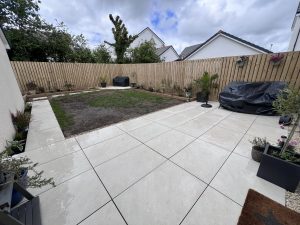
Porcelain is a man-made engineered stone — essentially clay fired at extremely high temperatures to create a dense, non-porous surface. It’s created in controlled conditions, which means every tile is virtually identical in size, colour, and finish.
Uniform appearance — Porcelain tiles have a consistent colour and texture. This creates that sleek, modern look that photographs beautifully and feels very current. There’s no guesswork about how the finished patio will look.
Extremely low maintenance — Because porcelain is non-porous, it doesn’t absorb water or stains. Spill a glass of red wine? Wipe it up and it won’t stain. Ice melt in winter? No problem — porcelain won’t absorb water and crack like some natural stones can.
Superior durability — Porcelain is harder than granite and extremely resistant to wear. In high-traffic areas, it won’t show footprints or ingrain dirt the way natural stone sometimes can.
Long lifespan — When properly installed, a porcelain patio can last 20+ years without degrading. In fact, porcelain rarely needs sealing — a benefit that saves time and money over the years.
Frost resistant — This is important in Cornwall. Porcelain won’t suffer from frost damage or salt erosion from coastal winds, making it ideal for our climate.
Porcelain is more expensive than Indian slate — roughly 30-40% more for the material itself, depending on the brand and finish. However, this upfront cost is offset by the lower maintenance: you’re not paying for sealers, repairs, or replacements down the line.
Typical cost — Expect to pay from £70-100+ per square metre for a quality porcelain installation, including labour.
Our second installation was a gorgeous Indian slate patio, and it couldn’t be more different from the porcelain. This one has bags of character — literally. Each slate is unique, with its own texture, colour variation, and irregular edges.
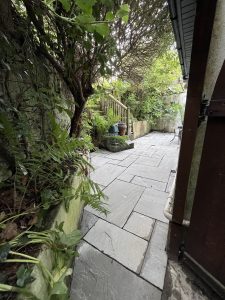
Indian slate is a natural stone, quarried and split from quarries in India. It’s a real stone with all the authenticity that implies — no two pieces are exactly alike. The colours range from cool greys to warm russets and ochres, often all in the same patio.
Natural beauty and character — This is the big one. Indian slate has a rustic, organic quality that porcelain simply can’t replicate. Each stone is different, which creates a patio that feels like it belongs in the landscape rather than sitting on top of it. Perfect for country homes, traditional gardens, or anyone who loves natural materials.
Warm aesthetic — The colour variation in Indian slate — those warm browns, reds, and softer greys — creates a timeless, inviting look that works with almost any garden style.
Tactile surface — Slate has a slightly textured surface (though not dangerously slippery). This adds interest underfoot and prevents the bland, uniform feel that can sometimes come with engineered stone.
Established material — Slate has been used for centuries. There’s a reason: it’s genuinely durable when properly maintained.
Higher maintenance — This is the trade-off. Slate is porous, which means it needs sealing — usually every 2-3 years in Cornwall, where we get a lot of rain and salt in the air. Without proper sealing, slate can stain, absorb water, and eventually break down.
Staining — Water stains, lichen growth, and weathering are more visible on slate than porcelain. You’ll see footprints and damp patches after rain, which some people love (adds character) and others find frustrating.
Frost risk — Slate can be susceptible to frost damage if water penetrates the stone and freezes. Proper sealing and good drainage are essential in a coastal climate like ours.
Uneven surface — The irregular thickness and edges of natural slate mean you need a skilled installer to ensure proper drainage and stability.
Indian slate is generally cheaper than porcelain upfront — roughly 60-70% of the porcelain cost for material. But you need to factor in the cost of sealing, maintenance, and potential repairs.
Typical cost — Expect £40-60 per square metre for quality Indian slate paving, plus labour. Add another £300-500 for sealing and maintenance over the next few years.
| Porcelain | Indian Slate | |
|---|---|---|
| Appearance | Contemporary, uniform, clean | Rustic, natural, characterful |
| Maintenance | Minimal (just clean it) | Regular (sealing every 2-3 years) |
| Stain resistance | Excellent | Poor (porous) |
| Frost resistance | Excellent | Good (if sealed) |
| Durability | 20+ years | 15-20 years with care |
| Cost (material) | £70-100+/m² | £40-60/m² |
| Best for | Modern homes, low-maintenance gardens, high-traffic areas | Character properties, traditional gardens, coastal retreat vibes |
It really depends on what you want from your garden:
Choose porcelain if:
Choose Indian slate if:
Both patios in our recent St Austell projects were installed on a proper base:
Both installations were completed in about 2-3 weeks, depending on the size of the garden and weather conditions.
Whether you’re drawn to the contemporary clean lines of porcelain or the natural beauty of Indian slate, we can help you build it. We work with both materials regularly across St Austell and the surrounding areas of Cornwall.
The first step is always a free consultation. We’ll visit your garden, understand what you’re after, talk through the pros and cons of each material for your space, and give you a no-obligation quote.
Ready to transform your outdoor space?
Call us on 07730 898992 or email hello@buildmaintain.co.uk for a free consultation and quote. We serve St Austell, Truro, Fowey, Lostwithiel, and all of Mid-Cornwall.
No job is too big or too small — whether you’re laying a cosy patio or redesigning your entire garden, we’d love to help.